



-

- DISCOVER SIKHISM
- SIKH GURUS
- Sikh Gurus
- Sri Guru Nanak Sahib Ji
- Sri Guru Angad Sahib Ji
- Sri Guru Amar Das Sahib Ji
- Sri Guru Ram Das Sahib Ji
- Sri Guru Arjan Sahib Ji
- Sri Guru Hargobind Sahib Ji
- Sri Guru Har Rai Sahib Ji
- Sri Guru Harkrishan Sahib Ji
- Sri Guru Tegh Bahadur Sahib Ji
- Sri Guru Gobind Singh Sahib Ji
- Sri Guru Granth Sahib Ji
- GURDWARAS
- SIKH LIBRARY
- DAILY HUKAMNAMA
- MORE
- KIRTAN
- LIVE TV
- ABOUT US

The Cat at the Well
A story that reflects on the importance of addressing root causes instead of quick fixes.
The Lesson of the Well: Finding the Real Problem
In a small, quiet village nestled between green hills and winding streams, the villagers depended on a single well for their water. It was a deep well, dug by their ancestors, and had always provided fresh, clear water for their needs. But one fateful day, a cat, hungry and curious, slipped and fell into the well. By the time the villagers found it, the poor cat had already died.
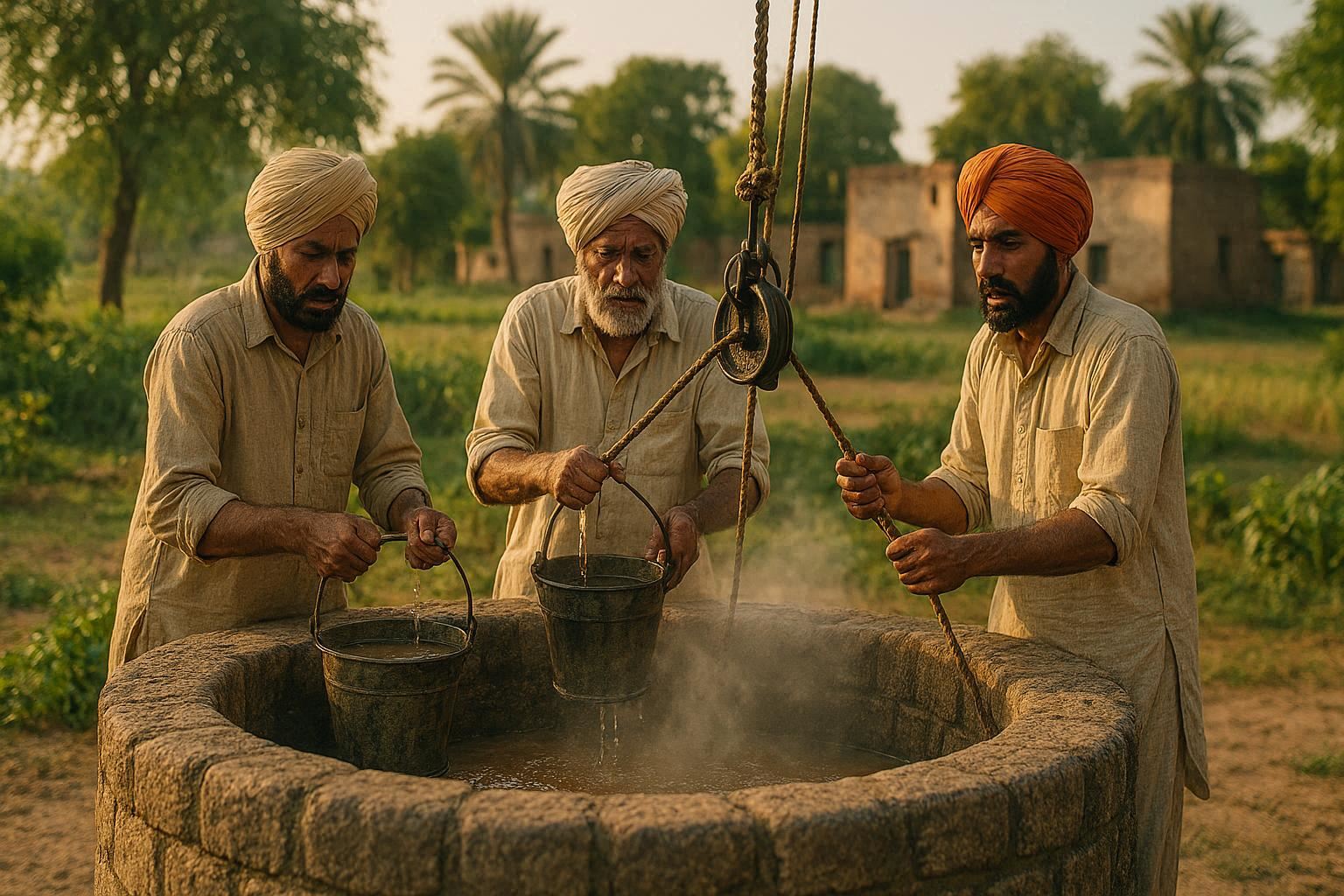
The villagers looking worried at the well.
Over the weeks, the cat's body began to decompose, releasing a foul stench that spread through the air and tainted the water. The once-pure well was now unusable, and the villagers found themselves in a dire predicament. They couldn't water their crops, drink the water, or even bathe without the unpleasant smell. Desperate to solve the problem, they decided to seek the advice of the wisest person they knew: a humble sage who lived atop a hill overlooking the village.
The villagers climbed the hill and approached the sage's modest cottage. With a deep bow, they explained their problem, hoping he could help.
After listening to their tale, the sage nodded thoughtfully. "I will help you," he said calmly. "But you must follow my instructions carefully."
The villagers leaned in, eager to hear the solution. "What should we do?" one of them asked.
The sage gave a simple command. "Remove the dead cat from the well, and then draw out a thousand buckets of water."
The villagers nodded, relieved at how simple the solution seemed. They hurried back to the well and, following the sage's instructions, began to draw out the water in large buckets. But when they returned home that evening, the stench still lingered, and the water was just as foul.
Confused, the villagers returned to the sage the next morning. "We followed your instructions exactly," they said, "but the water is still polluted. What went wrong?"
The sage remained calm and patient. "Did you remove the cat from the well?"
The villagers exchanged glances, and one of them sheepishly admitted, "No… we only removed the water. We didn't think the cat would matter that much."
The sage smiled gently. "You see, the water is polluted because the source of the contamination remains. Removing the water without addressing the real problem won't fix the issue. First, remove the cat, and only then will the water be clean again."
With newfound understanding, the villagers rushed back to the well and removed the cat's decomposed body. Once the source of the contamination was gone, they once again drew the water, bucket by bucket. This time, as the last of the water was removed, they noticed something extraordinary—the foul smell had vanished, and the water had returned to its clear, fresh state.
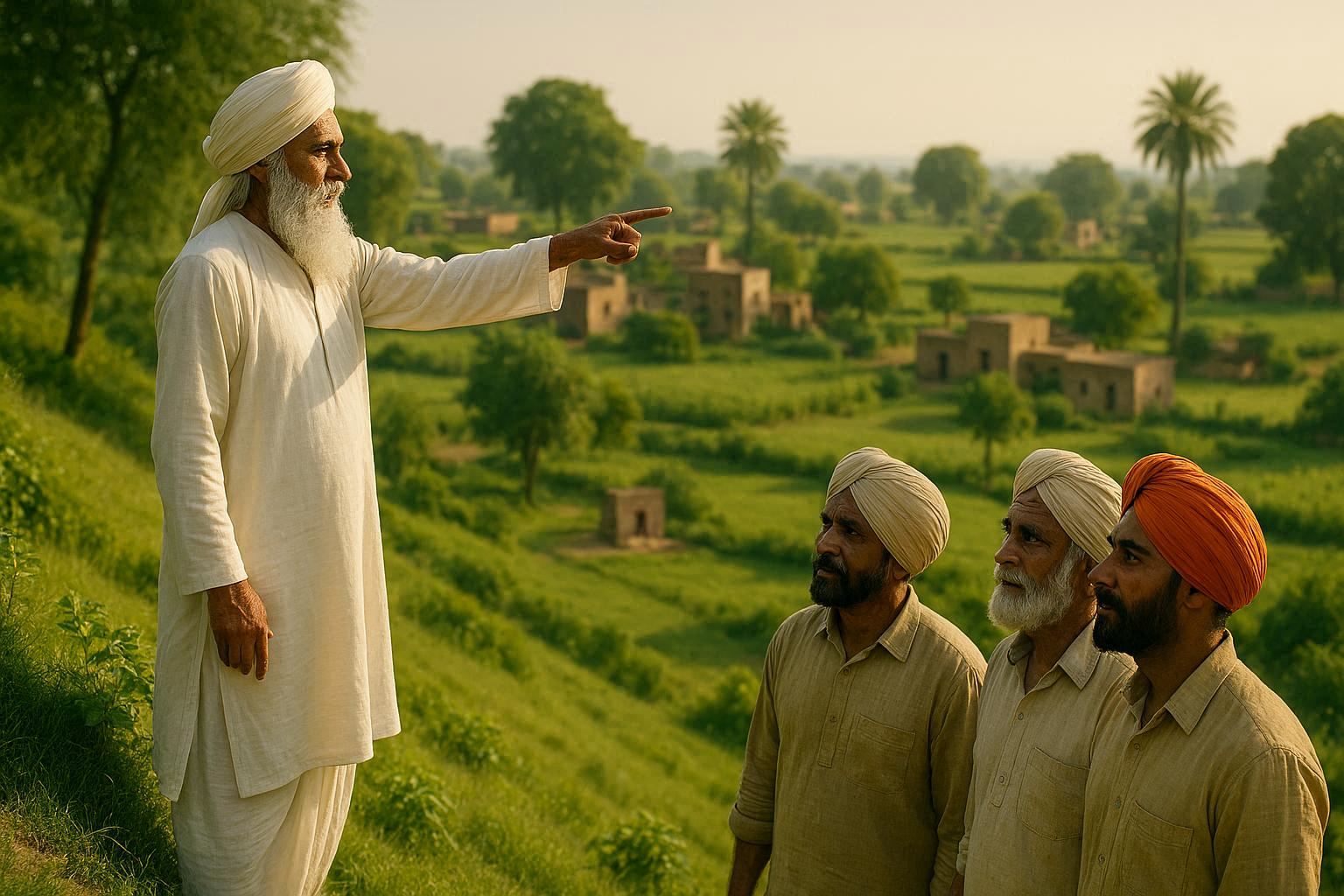
The sage gave a simple command.
The villagers marveled at the change and returned to the sage, who smiled at their gratitude. "The lesson," he said gently, "is that sometimes we focus on the symptoms of a problem rather than its root cause. True wisdom lies in understanding what needs to be addressed first, before seeking a solution."
From that day on, the villagers never forgot the sage's lesson. They learned that quick fixes and temporary solutions often fail to solve deeper issues, and that true healing requires patience, awareness, and the willingness to confront what lies beneath the surface.
And so, the village flourished once more, their well of water pure and abundant, as the villagers carried with them the wisdom of the well.
The Deeper Meaning
Our inner state is much like that well. The well represents our mind and heart, while the water symbolizes our thoughts and actions. The dead cat represents Haume (ego) and the five vices: lust, anger, greed, attachment, and pride.
We often try to purify ourselves through paath, Naam Simran, seva, and good actions—like drawing out buckets of water. These practices are essential. However, if the root impurity—Haume—remains within us, true inner cleansing does not occur. No matter how much water is removed, the well cannot become pure while the source of contamination is still present.
Through sincere Naam Abhyaas and deep Gurbani Vichaar, Haume itself begins to dissolve. This is the true cleansing of the well.
Importance of Humility in Bhagti
ਭਾਉ ਭਗਤਿ ਕਰਿ ਨੀਚੁ ਸਦਾਏ ॥
Bʰaa▫o bʰagaṫ kar neech saḋaa▫é ||
With loving devotional worship, abiding in humility.
ਤਉ ਨਾਨਕ ਮੋਖੰਤਰੁ ਪਾਏ ॥
Ṫa▫o Naanak mokʰanṫar paa▫é ||2||
O Nanak! Salvation is attained. ||2||
~ Sri Guru Granth Sahib Ji, Guru Nanak, Ang 470
This teaches us that true devotion comes with love and humility. Only then can one attain liberation from suffering.
◾ Spiritual practice without humility becomes hollow
◾ True bhagti requires being nimr (humble) from within
Can We Ignore the Five Vices?
At times, a misunderstanding arises: since Naam ultimately removes the vices, some believe there is no need to actively resist them. However, this can lead to serious spiritual error.
The five vices—lust, anger, greed, attachment, and pride—continue to influence us until they are subdued. Until that stage:
◾ We must not allow them to control our actions
◾ We must consciously resist their influence
For example:
◾ If anger arises, we should not act in rage
◾ If lust arises, we should not become enslaved by it
If we neglect this responsibility, we risk falling into grave actions. Many serious spiritual downfalls occur when one passively gives in to these forces rather than resisting them.
Two Stages of Spiritual Growth
1. First Step – Working Hard and Being Patient
◾ Apply conscious effort and restraint
◾ Reflect deeply through Gurbani Vichaar
◾ Actively guide and control the mind
At this stage, the struggle against the vices is real and necessary.
2. Next Step – Becoming Calm and Peaceful Inside
◾ The influence of vices naturally weakens
◾ The mind becomes stable and clear
◾ Inner discipline begins to flow effortlessly
Here, discipline does not disappear—it becomes natural. What once required effort now arises spontaneously, as Haume is gradually reduced.
Final Understanding
Just as the well could not be purified until the dead cat was removed, the mind cannot be purified until Haume is addressed.
◾ Paath, Naam, and seva are essential
◾ But without addressing ego, their full effect is not realized
At the same time:
◾ We cannot passively wait for transformation
◾ We must actively resist the pull of the vices while engaging in Naam
Teaching from the Guru Granth Sahib
This shabad highlights that true cleansing must begin from within:
ਵਸਤ੍ਰ ਪਖਾਲਿ ਪਖਾਲੇ ਕਾਇਆ ਆਪੇ ਸੰਜਮਿ ਹੋਵੈ ॥
Vasṫar pakʰaal pakʰaalé kaa▫i▫aa aapé sanjam hovæ ||
One may wash their clothes and cleanse their body, but true discipline comes from within.
ਅੰਤਰਿ ਮੈਲੁ ਲਗੀ ਨਹੀ ਜਾਣੈ ਬਾਹਰਹੁ ਮਲਿ ਮਲਿ ਧੋਵੈ ॥
Anṫar mæl lagee nahee jaaṇæ baahrahu mal mal ḋʰovæ ||
If inner impurity remains, outward cleansing cannot remove it.
ਅੰਧਾ ਭੂਲਿ ਪਇਆ ਜਮ ਜਾਲੇ ॥
Anḋʰaa bʰool pa▫i▫aa jam jaalé ||
Those who remain blind to this truth fall into spiritual entanglement.
~ Sri Guru Granth Sahib Ji, Guru Nanak, Ang 139
Gurbani repeatedly emphasizes that inner transformation—not just outward action—is the foundation of true spirituality. Without removing the root impurity, spiritual practices alone cannot fully purify the mind.
Core Message
Spiritual practice is not only about what we do outwardly, but what we remove inwardly.
Naam, paath, and seva are powerful—but their true effect is realized when Haume is confronted and reduced. At the same time, we must remain vigilant and actively resist the influence of the five vices.
Effort and awareness must go hand in hand with Naam Abhyaas.
Reflective Closing
Before trying to fix things again, it's good to ask:
Have I removed the "dead cat" within me?
 Back to Punjabi Folk Tales List