



-

- DISCOVER SIKHISM
- SIKH GURUS
- Sikh Gurus
- Sri Guru Nanak Sahib Ji
- Sri Guru Angad Sahib Ji
- Sri Guru Amar Das Sahib Ji
- Sri Guru Ram Das Sahib Ji
- Sri Guru Arjan Sahib Ji
- Sri Guru Hargobind Sahib Ji
- Sri Guru Har Rai Sahib Ji
- Sri Guru Harkrishan Sahib Ji
- Sri Guru Tegh Bahadur Sahib Ji
- Sri Guru Gobind Singh Sahib Ji
- Sri Guru Granth Sahib Ji
- GURDWARAS
- SIKH LIBRARY
- DAILY HUKAMNAMA
- MORE
- KIRTAN
- LIVE TV
- ABOUT US

The Bird and the Tree 🐦🌳
A beautiful tale about gratitude, patience, and the power of giving.
The Story: Chirī te Pīpal 🐦
Once upon a time, in a peaceful village nestled between green hills, there stood a magnificent old pipal tree in the center of a vast, open field. The tree had been there for centuries, its branches reaching high into the sky, and its roots stretching deep into the earth. Over the years, it had become a sanctuary for countless birds and animals, offering them shade, shelter, and comfort through all the seasons.

A quiet guardian, giving shade and shelter to all.
At the base of the tree, a little bird built her nest. Every day, she sang joyful songs, her melodies carried by the gentle breeze to every corner of the village. The pipal tree loved her songs, and in return, it protected her nest from harsh winds and storms.
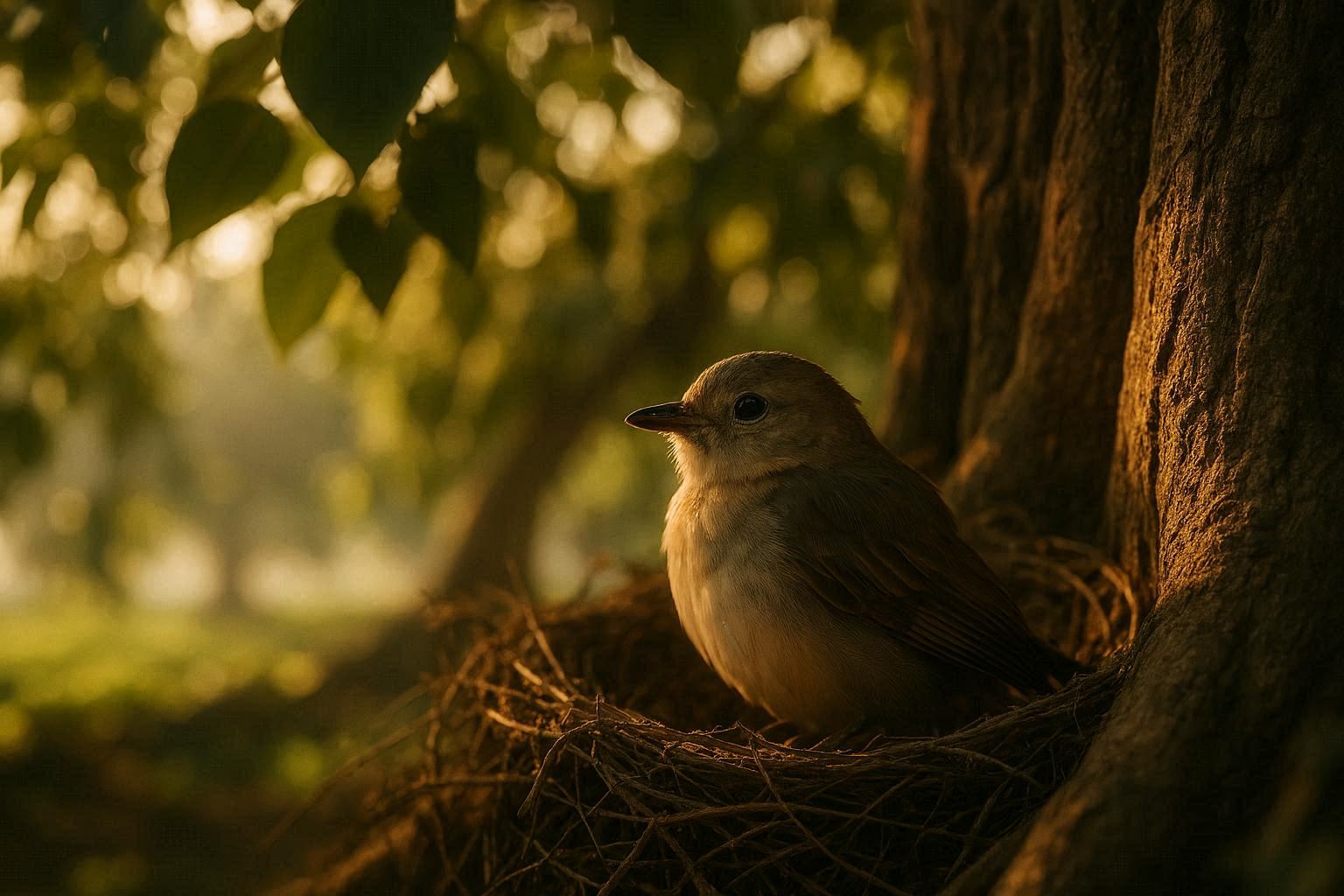
Songs of gratitude bloom under the tree's protection.
"I am so lucky to live here," the little bird would chirp every day. "The pipal tree is my guardian, keeping me safe and warm."
But as time passed, the bird began to feel restless. The tree's vast branches sometimes blocked her view of the sun, and its large roots made it hard to find new spots for her nest. She started to grumble, "Why must I always stay near this old tree? It takes up so much space and keeps me from flying freely. I should find a better place to live!"
The Bird's Decision 🐦
One bright morning, the bird made up her mind. She chirped to the tree, "Thank you for everything, but I think I need to move on. Your branches block the sun, and I cannot find new places to nest. I will leave and find a better spot."
The pipal tree, though sad, replied gently, "My dear bird, you have been my guest for many years. If you feel you must leave, I will not stop you. But remember, you will always have a home here."
With one final glance at the tree, the bird flew off in search of a new home. The world outside the tree's shade was vast and unknown—but little did the bird know, her journey would not be as easy as she thought.

Venturing out, the bird leaves her safe home behind.
The Trials of the Bird 🦅
1. The Blazing Sun 🌞
As the bird soared higher into the sky, the warmth of the sun grew unbearable. The wide open space offered no shelter, and soon she felt the heat sear her feathers. She fluttered her wings, trying to stay in the cooler air, but the sun seemed to follow her everywhere.
After hours of flying, the bird finally spotted a tree in the distance. It was tall and strong, but its branches were sparse, offering little shade. She reluctantly perched there, feeling the burning rays of the sun still piercing through the leaves.
"The pipal tree may have blocked my view, but it also protected me from the sun," she thought wistfully. "I miss its shade already."

Even freedom burns without a place to rest.
2. The Mighty Storm 🌧️
The next day, as the bird continued her search, dark clouds began to gather. A fierce wind picked up, followed by a torrential downpour. The bird struggled to find shelter, fighting the storm with all her strength.
She tried to take refuge under a small bush, but the rain drenched her to the bone. Her feathers stuck to her body, and the cold made her shiver.
As the storm raged on, the bird thought of the pipal tree—the sturdy trunk, the wide canopy that had always shielded her from storms like this. "How foolish I was to leave," she thought. "At least the tree kept me safe, no matter how bad the weather got."
Exhausted and shivering, she yearned for the shelter the pipal tree had always provided.

Rain and wind show how fragile flight can be.
3. The Dangerous Hawk 🦅
As the storm cleared and the sun peeked through the clouds, the bird continued her search. But just as she began to relax, a shadow passed overhead. Looking up, she saw a hungry hawk soaring high in the sky. Its sharp eyes locked onto the little bird, and the hawk dove toward her.
With a racing heart, the bird darted to the left, narrowly avoiding the hawk's talons. She flew faster, but the hawk was relentless, swooping down again and again.
The bird remembered how the pipal tree had always kept her safe from such predators. The branches had formed a protective labyrinth, where no hawk could easily reach her. "Why did I leave? The tree kept me safe from all of this danger," she thought.
With a final burst of speed, the bird ducked into a bush, barely escaping the hawk's attack. She trembled, realizing how vulnerable she was without the protection of her old home.

Without shelter, danger feels closer than ever.
4. The Desolate Plain 🌾
After days of searching, the bird arrived at a wide open plain. There were no trees, no shelter, and the air felt dry and empty. The ground was cracked, and nothing green could be seen. Exhausted, the bird perched on a rock, defeated.

Loneliness teaches the value of home.
"I have flown so far, and yet I've found nothing," she thought. "The pipal tree wasn't perfect, but it was home. It gave me food, shelter, and protection from the elements. Perhaps I was too quick to judge."
As she rested, the bird began to reflect on her journey. Despite the vastness of the world, no place could offer the comfort and safety that the pipal tree had. The sun, the wind, the predators—all these challenges had shown her just how special her old home had been.
The Return 🌳
One day, a fierce storm approached. The bird found herself caught in the open, with no shelter in sight. Desperate and weary, she returned to the old pipal tree.

Coming back, the heart finally feels safe and whole.
The tree welcomed her with open branches. "Come, little bird, you are always welcome here," it whispered. The bird nestled beneath its broad leaves and, for the first time in a long while, felt safe and at peace.
The Bird's Lesson 🌱
As the storm passed and the skies cleared, the bird perched on the tree and thought long and hard. "I was so quick to judge the pipal tree," she realized. "It provided me with everything I needed—safety, shelter, and peace. My impatience led me to leave, but now I understand the value of being grateful for what I have."
The bird thanked the tree and promised to always appreciate the shelter it offered her. From that day on, she never took the tree's protection for granted. In return, she sang the sweetest songs to the tree, her songs a tribute to her faithful guardian.
The Animals Rejoice 🎶
The birds and animals of the forest noticed the little bird's return. They too began to sing songs of gratitude for the pipal tree's kindness. Together, they gathered in the shade, celebrating the harmony and peace that filled the forest. Everyone praised the bird for her wisdom in returning to her guardian tree.
Moral of the Story 🌟
1. Gratitude brings peace: Appreciate the things you have before seeking something else. Gratitude helps you find contentment in what you already possess.
2. Patience is key: Sometimes rushing into decisions without thinking can lead to regret. Take time to understand what you already have before making changes.
3. Value what you are given: The things that offer us the most protection and comfort are often the ones we take for granted. Recognizing their value is important.
A Sikh Teaching About Patience 📖
This story also reminds us of a teaching from the Guru Granth Sahib:
ਇਕਿ ਆਵਹਿ ਇਕਿ ਜਾਵਹੀ ਪੂਰਿ ਭਰੇ ਅਹੰਕਾਰਿ ॥
Ik aavahi ik jaavhee poor bʰaré ahaⁿkaar ||
Some come, and some go; they are totally filled with egotism.
ਮਨਹਠਿ ਮਤੀ ਬੂਡੀਐ ਗੁਰਮੁਖਿ ਸਚੁ ਸੁ ਤਾਰਿ ॥੧॥
Manhatʰ maṫee boodee▫æ gurmukʰ sach so ṫaar. ||1||
Through stubborn-mindedness, the intellect is drowned; one who becomes Gurmukh and truthful is saved. ||1||
~ Sri Guru Granth Sahib Ji, Guru Nanak, Siree Raag, Ang 20
This teaching emphasizes the importance of humility and self-reflection Just as the bird's journey led her to recognize the value of the pipal tree's protection, this wisdom teaches us to reflect on our actions and overcome our ego. By doing so, we can find true peace and salvation. When we release our stubbornness and pride, and embrace truth and humility, we can find the strength to navigate life's challenges. The bird's return to the tree symbolizes this process of self-reflection and the wisdom that comes from understanding what we already have rather than constantly seeking more.
Lesson for Kids ✨
1. 🙏 Be thankful: Remember to be grateful for the things that provide you with comfort and support. Appreciate the people and places that take care of you.
2. ⏳ Be patient: Sometimes it's better to wait and think before making decisions, rather than rushing to find something new.
3. 🌳 Value your home: The places and people that provide you with safety and love are more valuable than you may realize. Take care of them!
Core Message 💡
This story teaches us that patience, gratitude, and understanding lead to true happiness and peace. Like the bird, we should appreciate what we have, remain humble, and not be quick to chase after something we think is better, only to find out later that we had the best thing all along.
Reflective Closing 🌿
Next time you find yourself feeling impatient or ungrateful, remember the bird and the tree. Take a step back, be patient, and reflect on what you already have. True contentment and happiness come from understanding and appreciating the little things around us.
 Back to Punjabi Folk Tales List